
❓ Frequently Asked Questions
Starting fencing in KwaZulu-Natal
Everything a new fencer or parent needs to know — from your first session to national selection. If your question isn't here, we'd love to hear from you.

Getting started
What age can my child start fencing?+
Most clubs in KZN welcome children from around 7–8 years old, once they can follow instructions and handle basic co-ordination drills. There is no upper age limit — we have active fencers from primary school right through to masters age categories.
Do I need any experience or a specific fitness level to start?+
None at all. Coaches introduce footwork, balance and blade work step by step. Fencing itself builds the fitness, agility and focus you need — beginners of every shape, size and background thrive.
How do I find a club near me?+
Visit our Clubs page for a full list of affiliated clubs across KwaZulu-Natal, including Durban, the North Coast, Pietermaritzburg and surrounding areas. Each listing includes contact details and training venues.
What happens at a first session?+
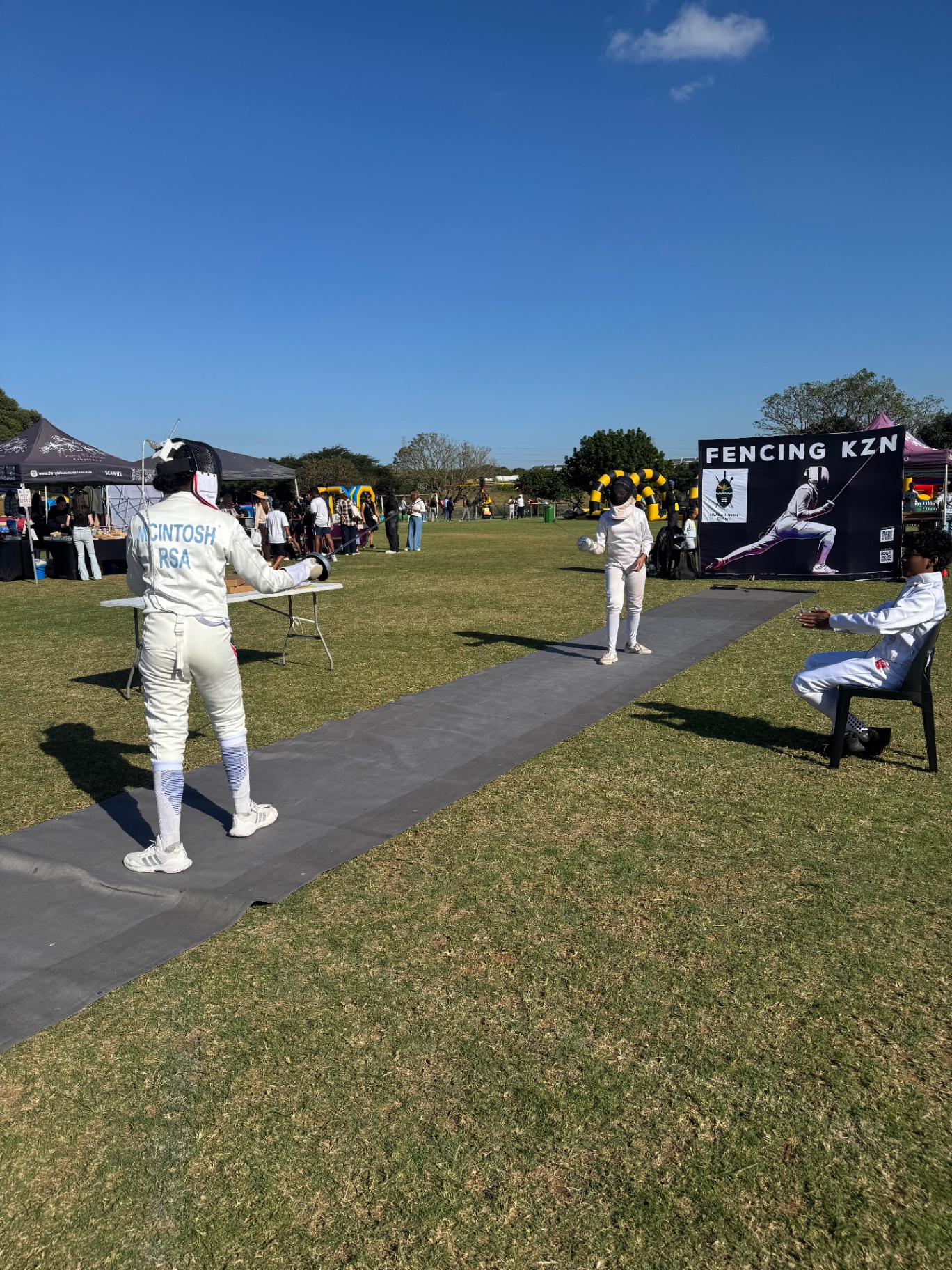
Expect a warm-up, an introduction to footwork (advance, retreat, lunge) and a chance to hold a training blade. Most clubs offer a free or low-cost trial session so newcomers can try before committing.
Cost & equipment
How much does it cost to start?+
Beginners typically only pay a modest club training fee. Loan equipment (mask, jacket, glove, blade) is usually provided for the first few months so families can decide before investing in personal kit.
When should we buy our own equipment?+
Once a fencer commits to training regularly (usually after 3–6 months) they will want their own mask, jacket, glove and weapon. Coaches guide families on sizing, brand and the correct specification for the fencer's age and weapon.
Which weapon should I choose — foil, épée or sabre?+
Your coach will help you decide which weapon to begin with.
Are there additional costs like licensing or competitions?+
Yes — competing fencers pay an annual FFSA licence, plus entry fees for provincial and national events. Travel costs apply for national and international selection.
Safety & training
Is fencing safe?+
Fencing is one of the safest Olympic sports. Every fencer wears a certified mask, jacket, glove and plastron; blades are flexible and blunted; and coaches enforce strict safety protocols during every session.
How often should a beginner train?+
One to two sessions per week is a great starting point. Fencers aiming at provincial or national level typically progress to 3–5 sessions per week including private lessons and open bouting.
Pathway & opportunities
How does a fencer progress from beginner to national level?+
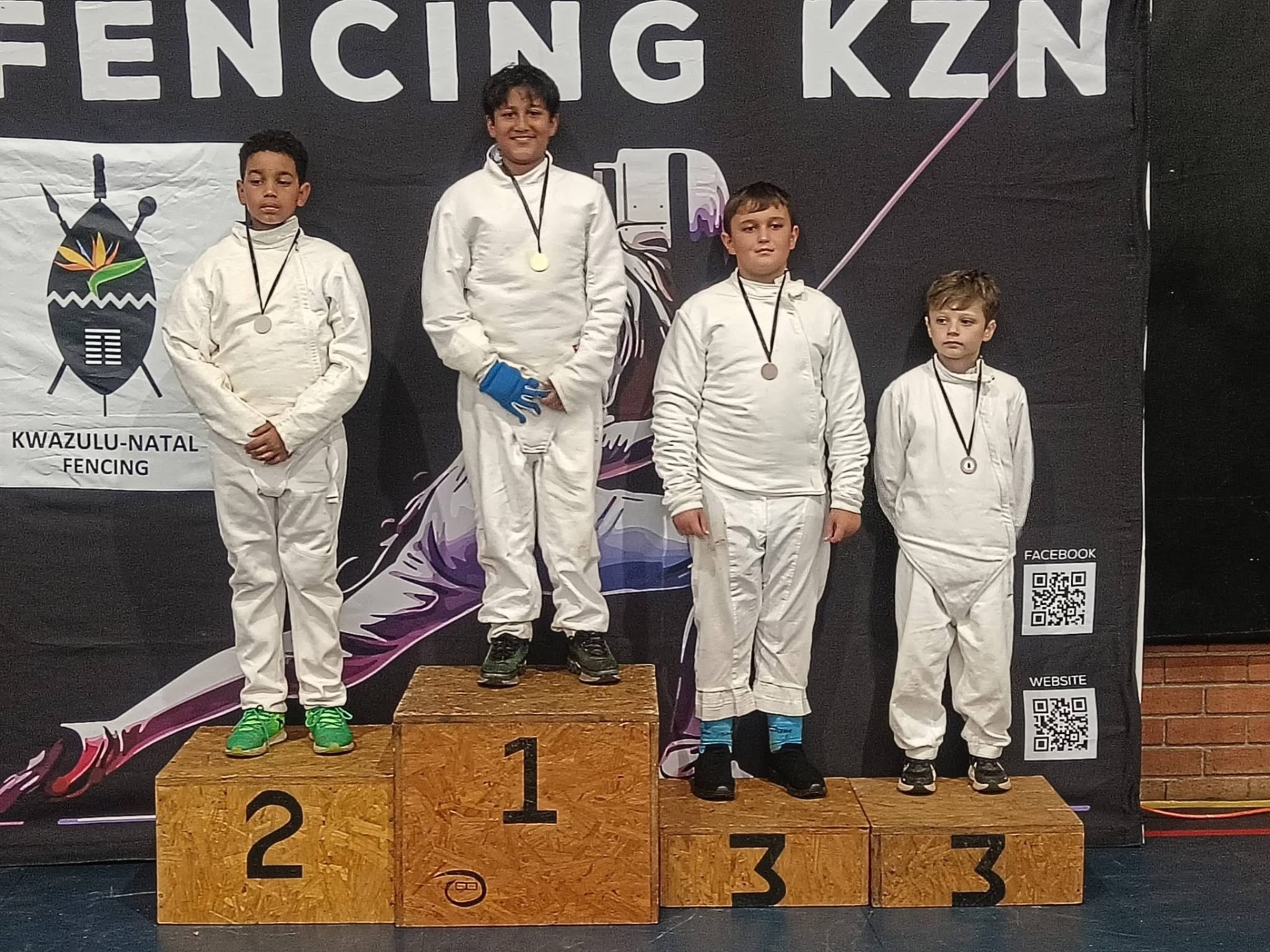
Fencers move from club training, to provincial competitions and KZN colours, to South African national events and ranking, and — for those who meet selection — to international representation. Our Pathways page walks through every stage with pictures and examples.
Can fencing help with school and university opportunities?+
Yes. Fencing develops discipline, resilience and focus that translate directly into academic performance. National colours can support tertiary sports bursaries in South Africa and abroad, especially in the USA where fencing is a recognised NCAA sport.
How competitive is fencing in KwaZulu-Natal?+
KZN is growing contender in fencing in South Africa. Our fencers regularly medal at national championships and represent the country at African Championship. See our KZN Performance page for recent results.
Is fencing an inclusive sport?+
Absolutely. Fencing in KZN is proudly multicultural and welcoming — fencers of every background, gender and language share the strip. It is one of the few sports where physical strength is not the deciding factor; strategy, timing and courage matter most.
Still have questions?
We're here to help you take the first step.
Reach out to Fencing KZN and we'll connect you with the closest club, coach or programme for your goals.