
Fencing for Kids in Durban: More Than Just a Screen-Free Sport
By Yolanda Haripersad, Chairperson — Fencing KZN
When I first became a fencing parent, I honestly had no idea what I was walking into.
I knew fencing was an Olympic sport. I'd watched it on television. I knew there were swords. Beyond that? Not much. It certainly wasn't a sport I grew up with or ever imagined my own children would fall in love with.
Then my kids started fencing.
Somewhere between that first beginner lesson, the first competition, the first medals, and the many hours spent sitting beside a piste watching them compete, I realised fencing had become far more than just another after-school activity. It became a journey. And it became a community.
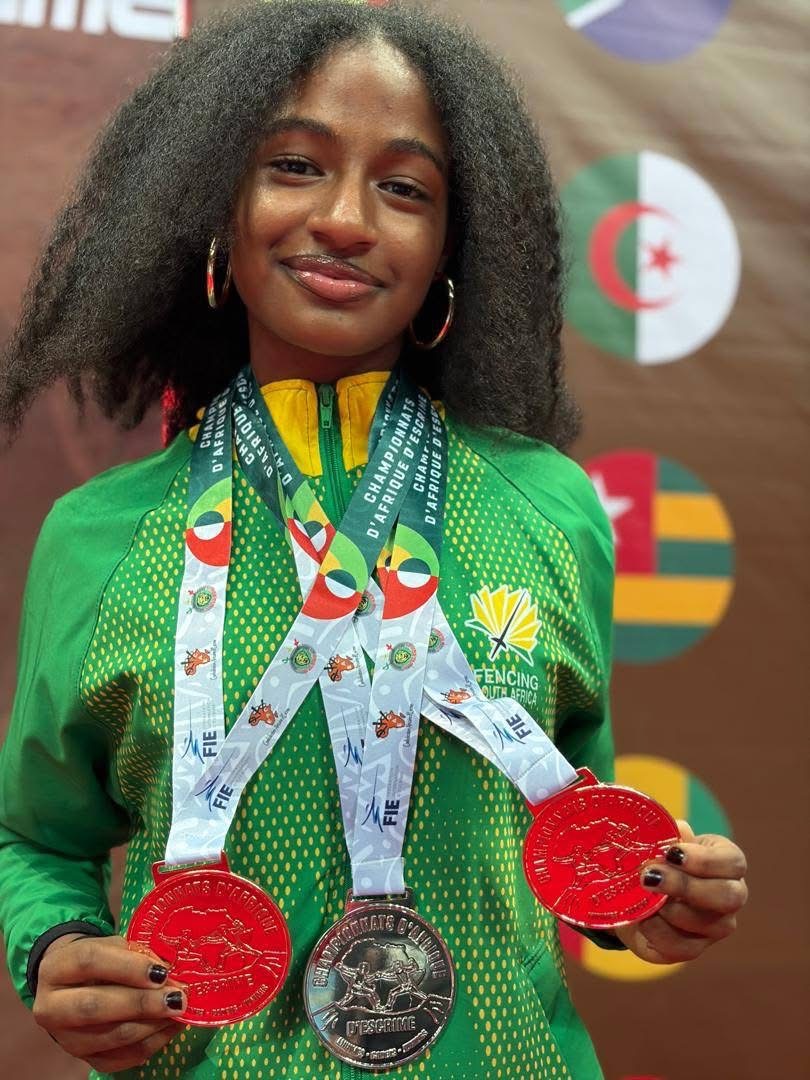
Today my children — Gianna, Kenley and Danica — are living proof of how far that journey can go. Between them they hold multiple South African national titles. Gianna has won Under-15 titles in both épée and foil and has represented South Africa at the Junior African Championships in Dakar. Kenley and Danica have both claimed South African Under-13 épée titles. None of that started with a national championship. It started with a child simply picking up a sword.
Looking for a way to get your child off the screen?
If you're a parent in Durban or anywhere in KwaZulu-Natal, you've probably had the conversation a hundred times.
- "Put the phone down."
- "Come off the iPad."
- "How long have you been gaming?"
- "Go outside."
I don't believe technology is the enemy. Our children are growing up in a digital world, and screens are part of their education, their friendships and their entertainment. But I do believe children need something that can genuinely compete with the screen for their attention — something that gets them moving, thinking, talking face-to-face with other children, and gives them a real reason to put the device down because they actually want to do something else.
For our family, fencing became that something.
And what I never expected was just how much more it would give them than physical activity. It gave them a community.
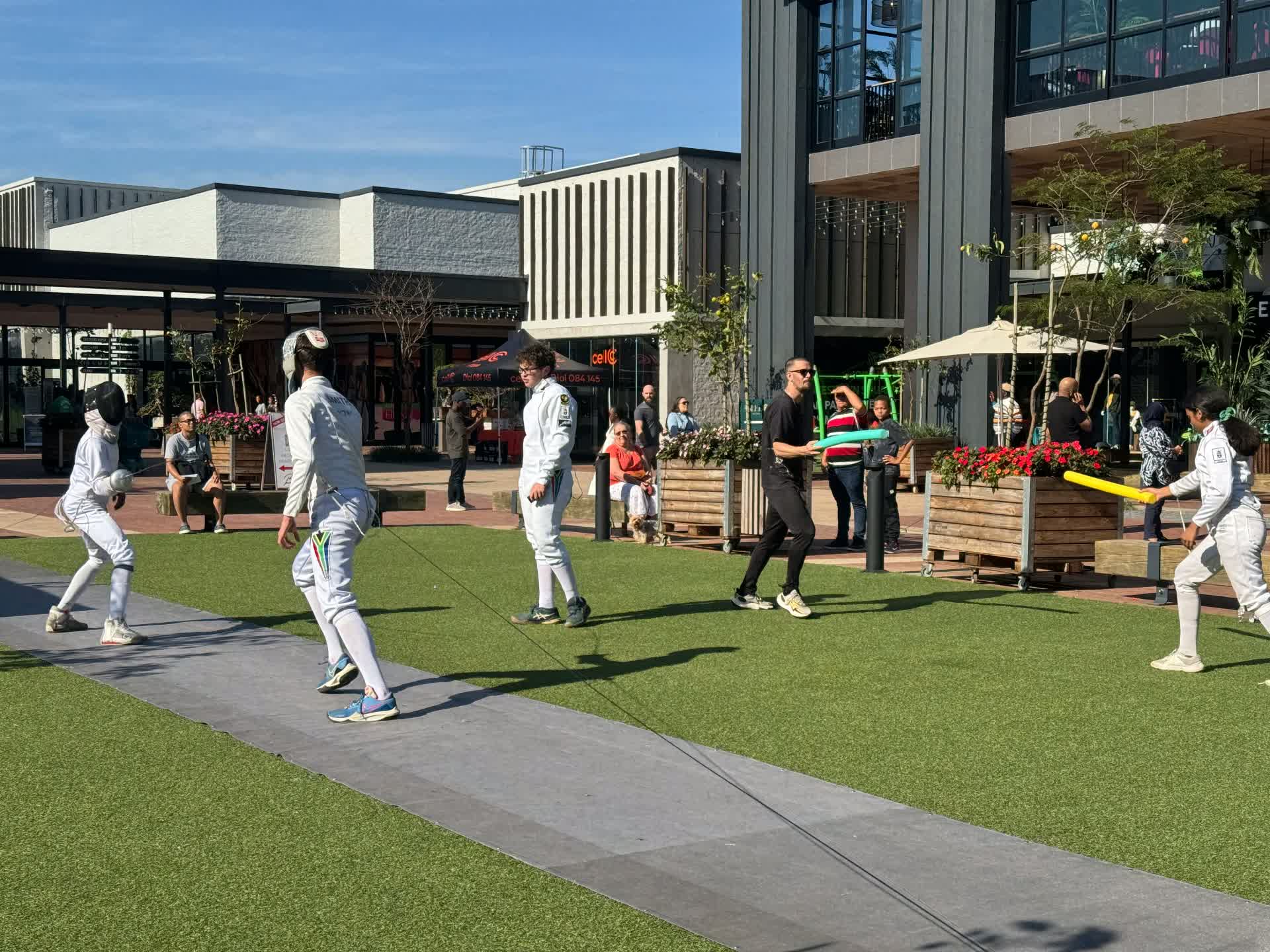
Fencing gets children moving — without requiring a "sporty" child
One of the reasons I love recommending fencing for kids in Durban is that it doesn't demand the traditional athlete mould.
Not every child loves soccer. Not every child wants to be tackled. Not every child enjoys big team sports. And some children simply don't see themselves as "sporty."
Fencing offers them another path. It's an indoor sport, which is especially useful here in KwaZulu-Natal where the weather doesn't always cooperate. It's non-contact in the traditional sense, yet still fast, exciting and competitive. It doesn't need a huge field. It doesn't require a child to be the biggest or strongest. And it doesn't expect them to arrive already knowing how to play.
- They start from zero
- Footwork, balance and distance
- Coordination
- Attack and defence
- Thinking several moves ahead
I've often described fencing as physical chess. You're moving your body while solving a problem in real time. When you're on the piste, there's simply no room to think about your phone.
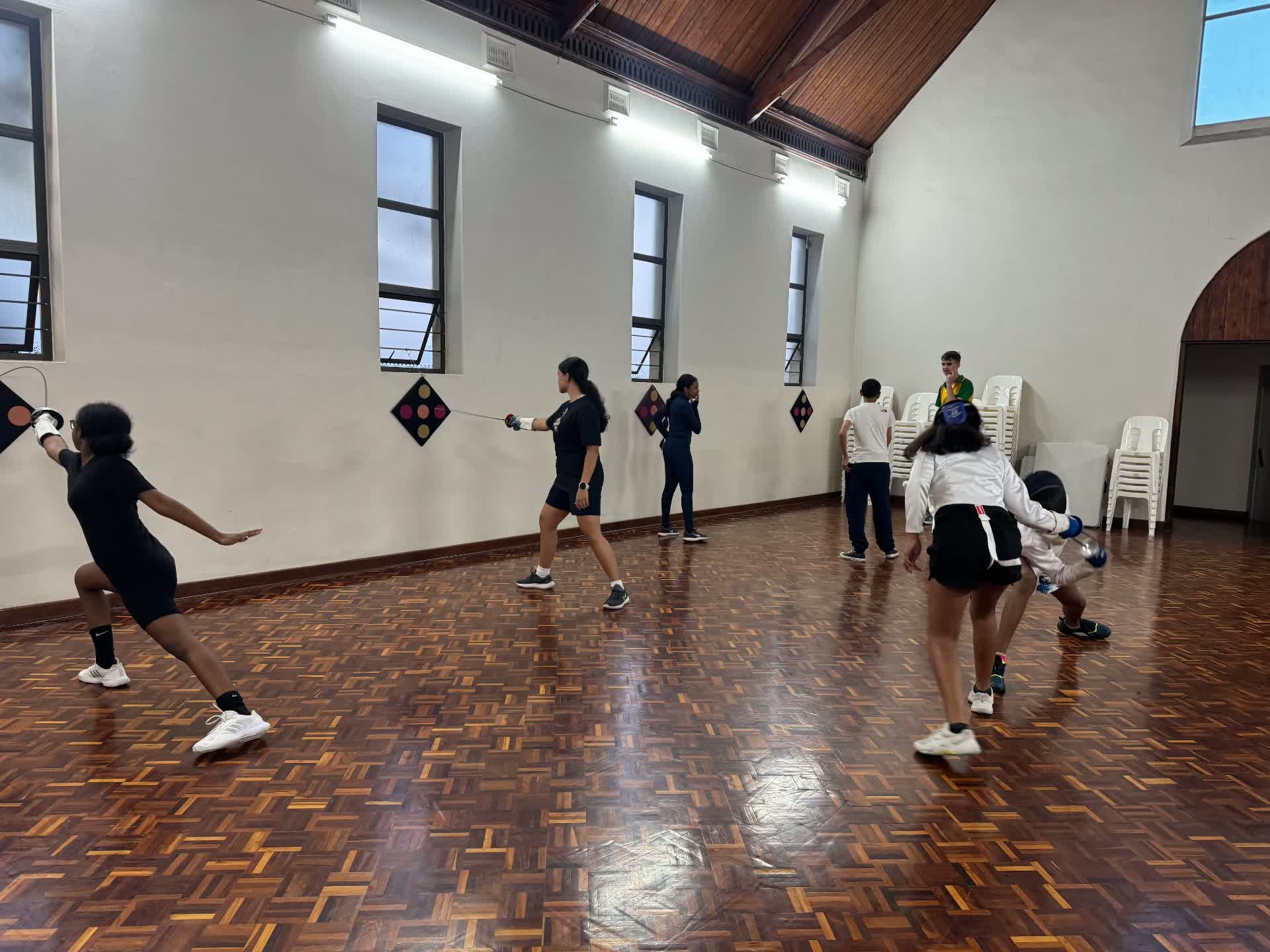
The biggest surprise for me was the community
When people picture fencing they usually see the individual athlete — one fencer, one opponent, one piste, one result. And yes, fencing is an individual sport in many ways. But behind every young fencer is a whole community.
There are coaches, parents, other children, clubs, referees and volunteers. There are families who travel to competitions together and friendships that form across clubs and provinces. My children have grown up around other young fencers. They know the children they compete against. They train together, compete against one another, cheer each other on, and then, when the bout is over, they're friends again.
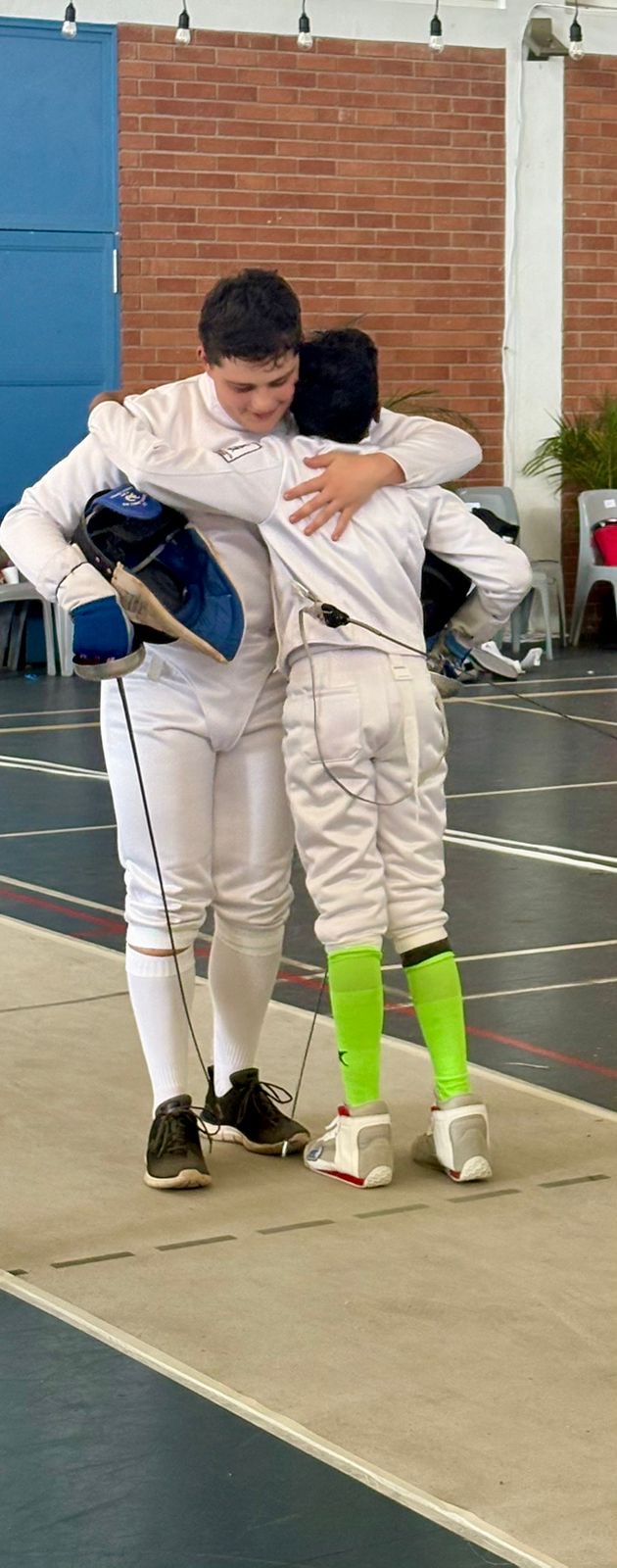
That's something I value deeply about fencing for kids in Durban and across KZN. The children aren't just building individual sporting careers. They're building the fencing community together.
And the parents become part of it too.
I never expected that. You sit together at competitions. You share travel plans and equipment tips. You celebrate each other's children and offer quiet support on the tough days. Somewhere along the way the parents become friends as well. That community matters, because parenting can feel isolating. Having a sporting space where your children grow alongside other children — and where you as a parent become part of that same community — is genuinely special.
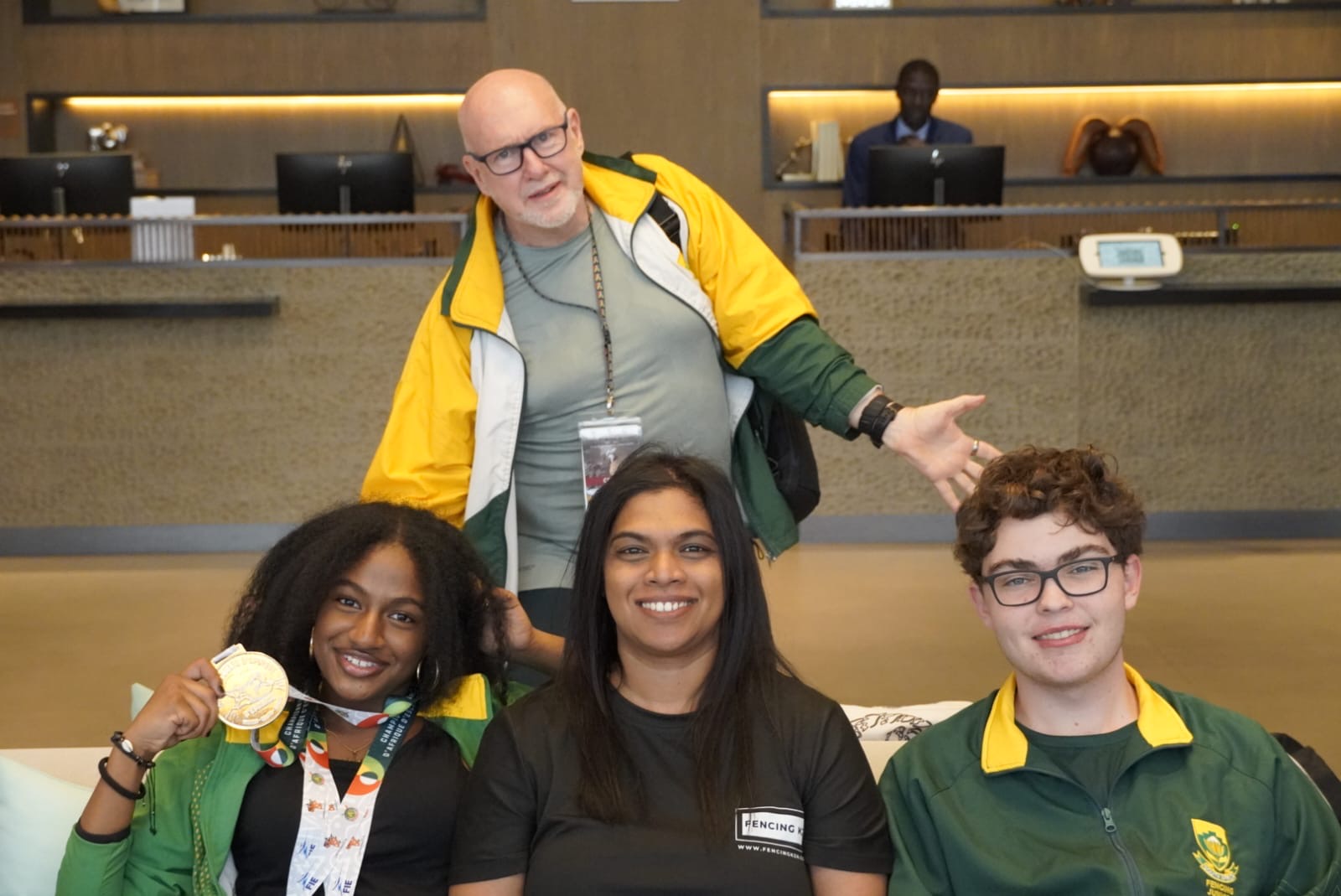
My children have changed enormously through fencing
This is the most personal part of our story. When they first started, none of us could have predicted how much the sport would shape them.
I've watched them come out of their shells. I've watched their confidence grow. I've watched them walk into rooms full of new people and find their place. I've watched them stand on a piste in front of a referee and an audience and compete. And I've watched them discover they are capable of far more than they once believed.
That confidence didn't appear simply because they started winning medals. Some of the biggest growth happened through the losses. Fencing teaches you very quickly that you won't always win. You can train hard and still lose. You can feel ready and have a terrible day. You can win one competition and struggle at the next. And then you have to get back up.
That process builds something powerful in a child. It teaches them that losing doesn't define them. It teaches them they can feel disappointed and still continue. It teaches them to look at what went wrong rather than simply conclude "I'm not good enough." Slowly that becomes a deeper kind of confidence — the kind that says: "Even if I lose, I'll be okay. I'll learn. I'll come back."
And yes… my children are incredibly competitive. They don't just want to participate. They want to win. They want to understand why they lost. They want another chance. As a parent that can be both wonderful and exhausting! But fencing has given them a healthy outlet for that fire. They have goals, rankings, competitions and opponents. Most importantly, they've learned that being competitive doesn't mean being a bad sport. You can want to win desperately and still respect the person opposite you. You can be disappointed and still shake hands. You can celebrate your own success while being genuinely happy for someone else's.
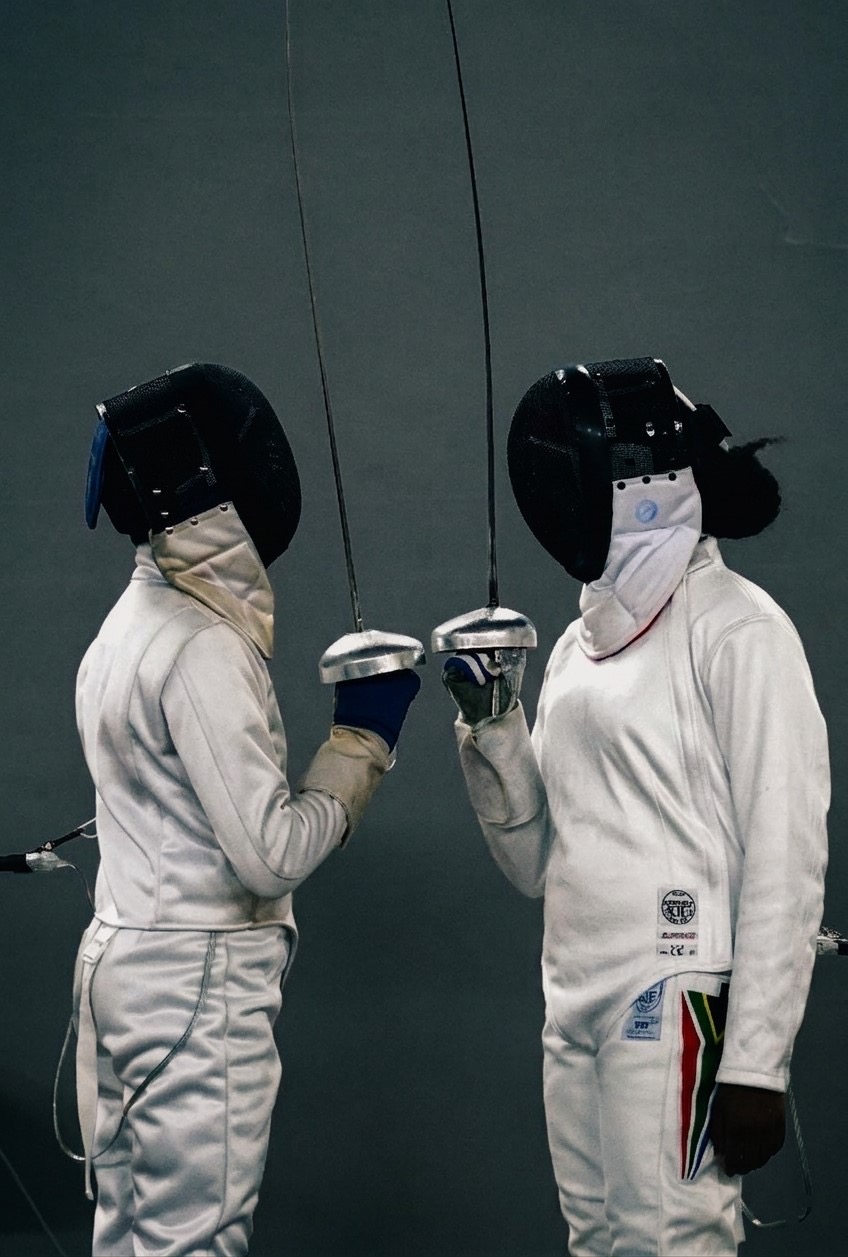
The medals are wonderful — but they're not the whole story
I'm incredibly proud of what Gianna, Kenley and Danica have achieved. The national titles and international experience mean a great deal. But if you asked me what I value most about their fencing journey, I wouldn't simply list the medals.
I'd talk about the people they've met, the friendships they've formed, the confidence they've developed, the resilience they've learned, and the ability to walk into a room and feel they belong. I'd talk about the fact that they have become part of something bigger than themselves.
Fencing is a community sport — even when you're fencing alone. You might be the only person on the piste, but you're never really alone. Behind you is your coach. Around you are your clubmates. Across the venue are other clubs. In the stands are parents. And throughout KwaZulu-Natal there is a growing community of people who want more children to experience this sport.
That's what drives me through Fencing KZN. I don't just want more children to learn how to fence. I want more children to belong to fencing. I want them to have friends through the sport. I want parents to meet other parents. I want schools to become part of the fencing community. I want clubs to work together. I want children from different backgrounds and different communities to meet on the piste and become friends off it. And I want us to grow the sport together — because the future of fencing in KwaZulu-Natal won't be built by one club or one athlete. It will be built by the community.
So, could fencing be the answer to getting your child off the screen?
Maybe. But I think the better question is this: What could your child discover if you gave them something else to focus on?
- They might discover a sport.
- They might discover a passion.
- They might discover competition.
- They might discover confidence.
- They might discover friendships.
- They might discover a community.
And they might discover something inside themselves that even you didn't know was there. That's what happened to us. We started with children learning to fence. Along the way they became national champions and international competitors. More importantly, they became confident young people who are comfortable stepping into a room, meeting people, taking on a challenge and giving it everything they've got. And our family became part of a community we now want to help grow for the next generation.
So when someone asks me whether their child should try fencing, my answer is simple: Yes. Give it a try.
Put the screen down. Put on the mask. Step onto the piste. Meet the community. And see where the journey takes you.
Ready to introduce your child to fencing in Durban or KwaZulu-Natal?
Fencing KZN is working to make the Olympic sport of fencing accessible to more children and communities across the province. Your child doesn't have to be athletic. They don't have to be competitive. They don't have to know anything about fencing. They just need to be willing to try something new.
Start with one child. Build a community. Grow the sport.