
Fencing Safety: Understanding Your Fencing Kit
350N, FIE 800N, masks, gloves and everything parents need to know about safe fencing equipment — written for fencing families in Durban and across KwaZulu-Natal.
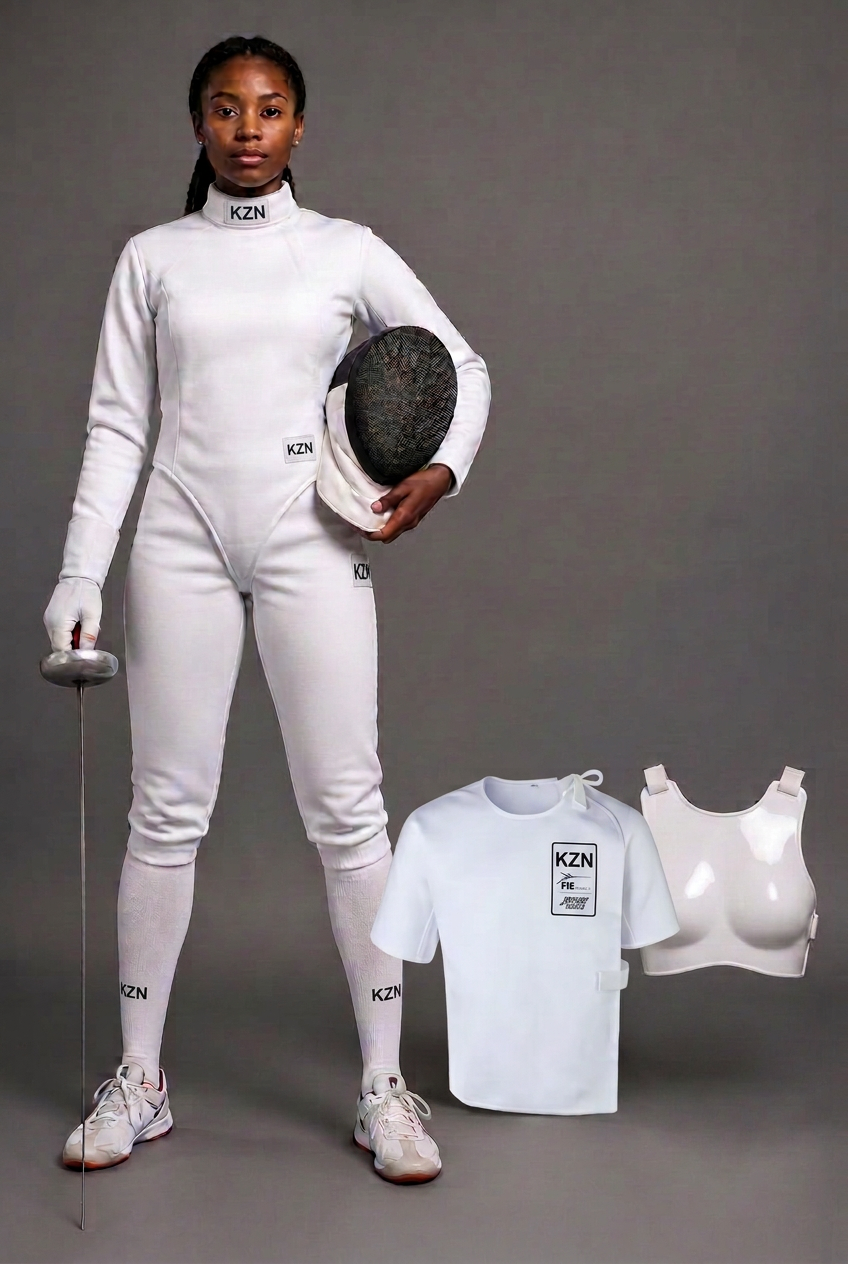
Fencing looks elegant.
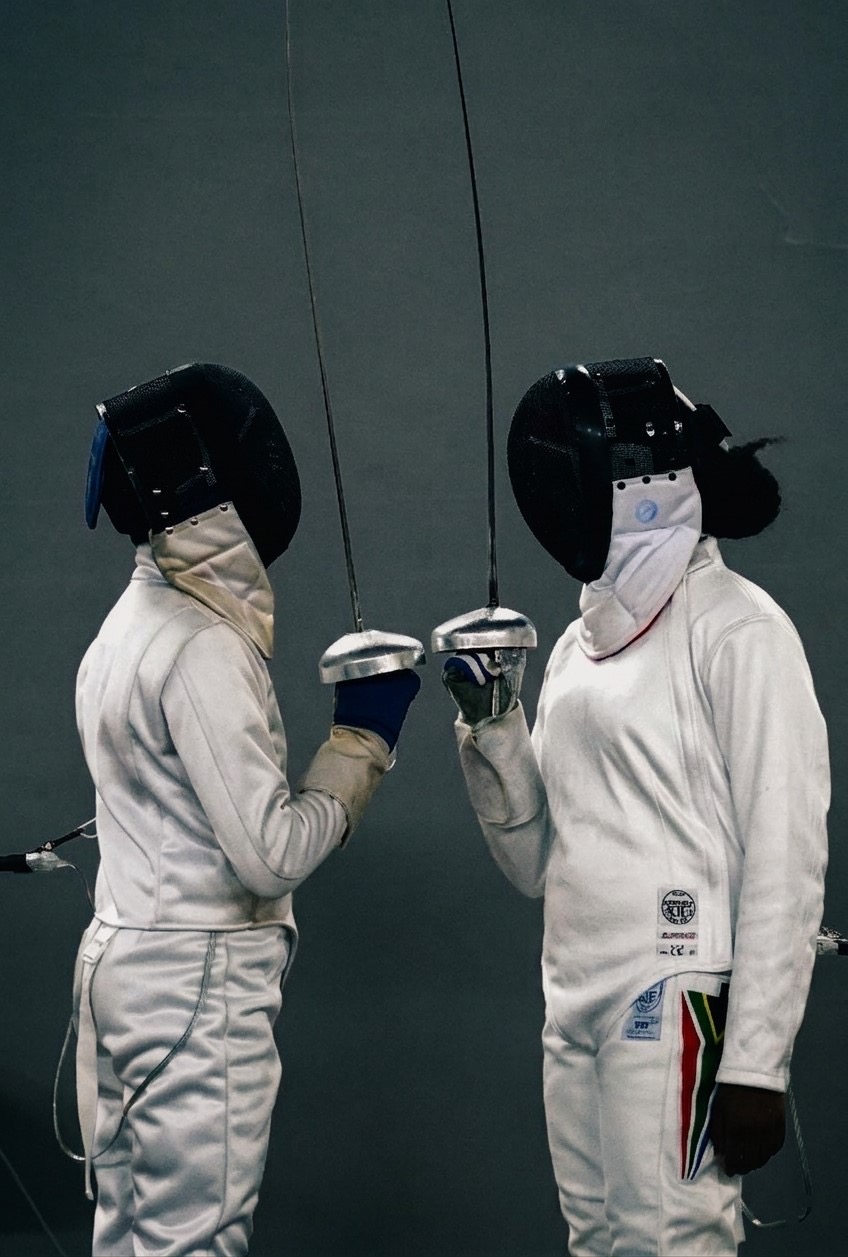
Two athletes stand opposite each other, weapons raised, waiting for the referee's command. Then, in a fraction of a second, one launches forward. The other retreats, parries, counter-attacks and scores. It can look almost effortless.
But fencing is also a sport involving weapons specifically designed to make contact with another person. That is why fencing safety equipment matters.
A fencing uniform is not simply a traditional white outfit. The jacket, breeches, under-plastron, mask, glove, socks and shoes are all part of a carefully designed protective system intended to reduce the likelihood and severity of injury.
1. Is fencing a dangerous sport?
Like every sport involving weapons, fencing carries inherent risks. However, modern fencing is a highly regulated sport with extensive rules governing equipment, weapons, competition procedures and athlete safety.
The International Fencing Federation (FIE) states that fencing equipment and clothing must provide the maximum protection compatible with the freedom of movement required for fencing. That balance is important: a fencer needs to be protected, but also needs to lunge, retreat, accelerate, change direction and execute precise movements.
No protective equipment can guarantee that an injury will never occur. Fencing safety is about reducing risk through a combination of:
- appropriate protective equipment
- correct equipment standards
- proper fit
- regular inspection
- correct maintenance
- safe weapons
- competent coaching
- appropriate refereeing
- suitable facilities
- responsible athlete behaviour
2. The fencing uniform is protective equipment
One of the biggest misconceptions among people unfamiliar with fencing is that the fencing uniform is simply a traditional sports outfit. It isn't — it is protective equipment, designed to protect exposed areas of the body while allowing free movement.
Depending on the level and weapon, a fencer's equipment may include:
- fencing jacket
- fencing breeches
- under-plastron
- fencing mask
- fencing glove
- long fencing socks
- fencing shoes
- chest protection
- conductive lamé
- other weapon-specific equipment

3. What does 350N mean?
The "N" refers to Newton, a unit of force. When protective fencing clothing is described as 350N, the figure refers to the material's tested resistance to penetration under the applicable protective-equipment testing standard. It is a laboratory performance specification — not a promise that the garment withstands every possible 350-newton impact in every circumstance.
A 350N fencing jacket is therefore not ordinary clothing. It is purpose-designed protective equipment, commonly available in South Africa and widely used by developing fencers for training and domestic-level fencing where the applicable competition rules permit it.
4. 350N versus FIE 800N
The simplest way to understand the difference is that 350N and 800N represent different levels of tested protective performance for fencing clothing.
| 350N | FIE / 800N | |
|---|---|---|
| Typical use | Beginner training and domestic fencing where permitted | FIE international competition |
| Clothing resistance | 350N | 800N |
| FIE homologation | Not required for ordinary domestic equipment | Required for applicable FIE competition equipment |
| Cost | Generally lower | Generally higher |
| FIE international competition | Not sufficient | Required |
| Intended pathway | Entry / development | International competition |
5. What does the FIE require?
For official FIE competition, protective clothing must meet the applicable FIE requirements, including the specified 800N protection for jackets, breeches and under-plastrons. The FIE also sets specific requirements for masks, gloves and conductive clothing.
6. 800N does not automatically mean FIE-approved
A jacket advertised as an "800N fencing jacket" is not necessarily an "FIE-homologated fencing jacket." The two descriptions are not interchangeable. When buying for an athlete moving into international competition, look for the appropriate FIE markings and confirm the requirements with the coach or competition organiser.
7. Jacket, under-plastron and breeches
The fencing jacket
A proper fencing jacket should:
- fit correctly
- allow unrestricted movement
- close securely
- cover the required areas of the body
- overlap appropriately with the breeches
- have intact seams
- have no significant holes or tears
- meet the standard required for the competition
Why fit matters
A jacket that is too large creates folds and gaps. A jacket that is too small restricts movement. Neither is ideal — and this matters most with growing children. It is tempting to buy oversized kit so the child can "grow into it," but with protective equipment the priority is correct protection and fit today. If the protective material does not stay correctly positioned while the athlete moves, the benefit of the equipment is compromised.
The under-plastron
Worn under the jacket, the plastron adds a further layer over important areas of the upper body. For FIE competition an 800N protective under-garment covering the required vital areas is mandatory. It is never an optional extra just because it is hidden.
The breeches
Breeches protect the lower body and upper legs while allowing deep lunges and rapid footwork; at FIE level they must meet the applicable 800N requirements. Inspect regularly for worn or thinning fabric, holes, damaged seams, damaged fasteners and leg-strap problems. A small cosmetic mark is not necessarily a safety issue — a hole or compromised protective area is.
8. The fencing mask
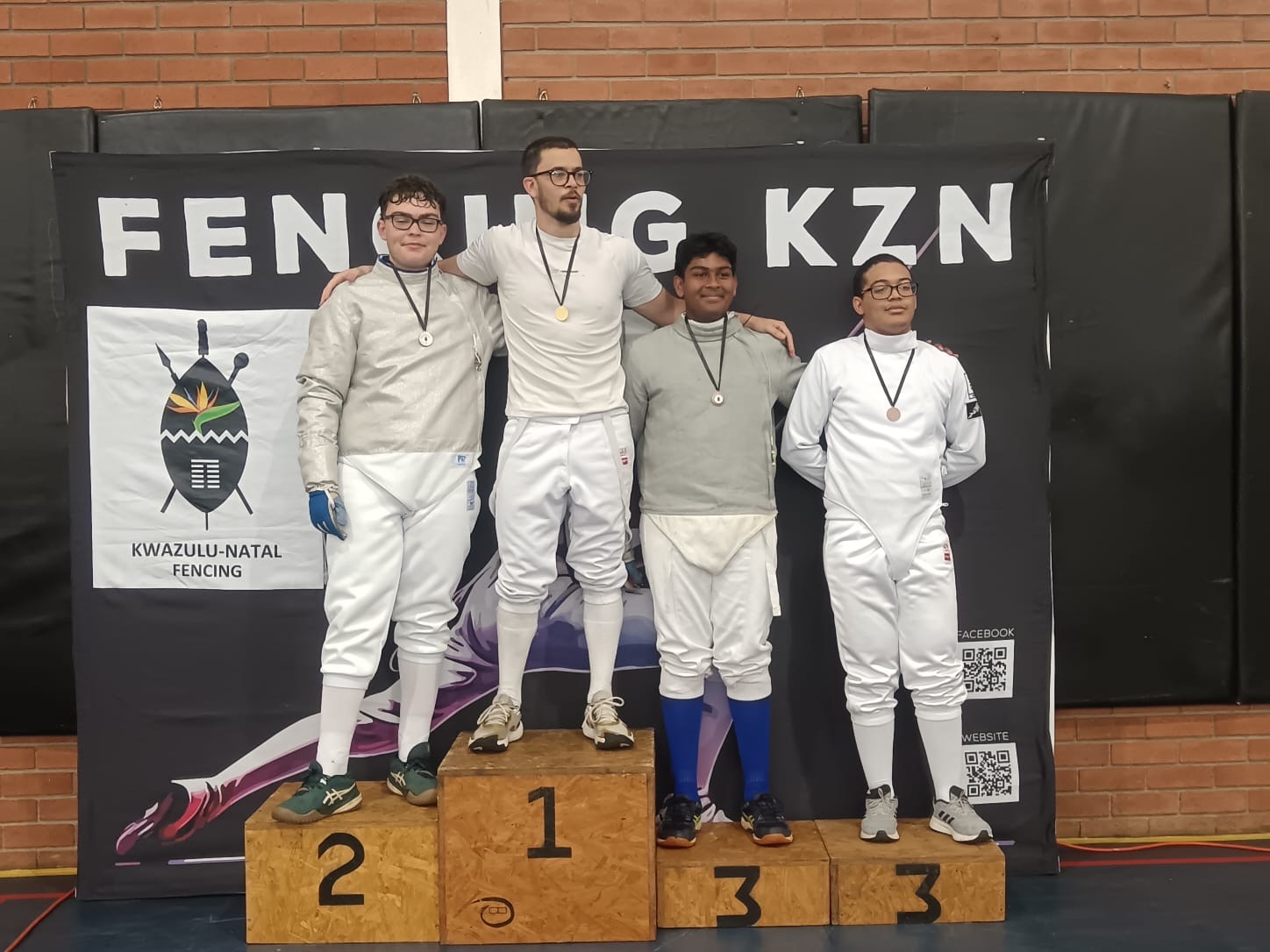
The mask is the most recognisable — and one of the most important — pieces of safety equipment. It protects the face, eyes, head, ears, neck and throat area, and consists of the metal mesh, bib, padding and fastening system. All of those components matter.
Never treat a mask as "just a mask"
A mask must fit securely. It should not:
- slide forward
- move excessively
- fall off during sudden movement
- have damaged mesh
- have damaged bib material
- have compromised stitching
- have a damaged fastening system
The mesh, the bib and the fastening
Inspect the mesh for holes, deformation, corrosion, broken wires and other structural deterioration — do not assume a mask is safe because it still "looks okay." Check the bib for fraying, holes, tears, damaged stitching and separation of materials. Check straps, Velcro, elastic, rear fastening systems, adjustment mechanisms and stitching. If the fastening no longer holds the mask securely, the mask should not be used until repaired or replaced.
350N mask versus FIE mask
A 350N mask may be suitable for training and domestic competition where the rules allow it. FIE competition masks have additional requirements governing construction, protective performance and, where applicable, electrical characteristics. A mask suitable for domestic fencing and an FIE-homologated mask are not necessarily the same product.
9. The glove and weapon-specific equipment
The glove protects the weapon hand — an area continuously involved in weapon manipulation and exposed to blade contact. It must protect without preventing weapon control: the fencer should be able to grip correctly, open and close the hand, manipulate the handle and perform precise technical actions.
At FIE level gloves have their own protective and electrical requirements covering the protective portion, seams, cuff and conductive material. A glove may look thick and robust while not meeting the requirements for a particular competition. The question is not "does this glove look protective?" but "does it meet the requirements for the level and weapon it is used for?"
Check the cuff condition, stitching, fastening, holes, wear and conductive material. Fit matters too — too large compromises dexterity, too small restricts movement. Don't buy a much larger glove because your child will grow into it.
Weapon-specific requirements
The entire body is valid target. No conductive lamé is used to define the target as in foil or sabre.
The valid target is primarily the torso; the conductive lamé identifies the target for the scoring system.
Target includes torso, arms and head — with its own conductive and mask requirements.
Foil and sabre use conductive equipment as part of the electric scoring system, so the glove and lamé form part of the electrical circuit. A foil, sabre and épée glove should not be assumed interchangeable for every competition. Always buy equipment appropriate to the weapon.
10. Chest protection, socks and shoes
A chest protector provides an additional layer of protection against weapon impact. It is commonly worn by female fencers and may be required or recommended in particular circumstances — but it is additional protection. It does not replace the jacket, the under-plastron or other required equipment.
Long socks cover the lower leg between breeches and shoes, reducing exposed skin; at international level appropriate long socks form part of the required clothing. Fencing shoes are built around repeated lunges, retreats, accelerations, sudden stops, changes of direction and explosive footwork, providing traction, lateral stability, flexibility and support. The correct shoe contributes to both performance and injury prevention.
11. Inspection, care, storage and replacement
When should equipment be inspected?
Before every fencing session. Not once a year, not only at competitions — every session. A fencer should develop the habit of checking their equipment before stepping onto the piste.
When should equipment be replaced?
There is no universal rule such as "replace your kit every two years." Equipment life depends on frequency of use, training volume, athlete size, washing, sweat, storage, sunlight, abrasion, manufacturer instructions and physical damage. The principle: replace protective equipment when its protective integrity can no longer be relied upon.
Sweat, cars and South African sunlight
Fencing kit gets very sweaty, especially in KwaZulu-Natal's warm, humid climate. After training, take the kit out of the bag, let it dry properly, follow the manufacturer's washing instructions, never leave damp clothing sealed in a bag, and inspect it once dry.
Don't leave kit in the car. A closed vehicle becomes extremely hot and repeated heat exposure contributes to deterioration of materials and adhesives. South Africa's high UV levels matter too — store equipment cool, dry, ventilated and out of direct sunlight.
12. A sensible fencing equipment pathway
FIE homologation exists so that a fencer competing internationally — from South Africa, France, Italy, Egypt, Japan or the United States — uses equipment meeting consistent standards. There is no universal age at which a fencer moves from 350N to FIE kit; it depends on the pathway, and the athlete, parent and coach should plan it together.
- Introduction
The club provides or hires appropriate equipment. The athlete learns the fundamentals and equipment care.
- Regular club fencing
The athlete begins buying personal protective equipment appropriate for training and domestic participation.
- Domestic competition
The athlete owns a complete kit meeting the requirements of the competitions they enter.
- National competition
Athlete and coach review requirements carefully and identify any upgrades needed.
- International pathway
The athlete transitions to equipment meeting the applicable FIE requirements.
- International competition
The athlete competes with the required FIE-homologated equipment.
If your child has just started, speak to the club or coach before buying a complete kit and ask: "What equipment do you recommend for my child's current level and the competitions they are likely to enter?" You can find our affiliated clubs on the Fencing KZN clubs page and the competition pathway on our pathways page.
13. The five-minute safety check
- Mesh intact
- Bib intact
- Fastening system works
- Fits securely
- Padding intact
- Correct size
- Correct safety standard
- No holes or tears
- Seams intact
- Closes correctly
- Correct standard
- Correct size
- Correctly positioned
- No damage
- Correct standard
- No holes or tears
- Seams intact
- Leg strap functioning
- Correct hand and weapon
- Good fit
- Fingers and palm intact
- Cuff intact
- Conductive material intact where required
- Socks long enough
- No exposed lower leg
- Good grip
- No structural damage
- Correct weapon
- Blade intact
- Guard and handle secure
- Point functioning
- Electrics working where applicable
- What level does my child fence at?
- What weapon?
- What competitions are they entering?
- What standard does that competition require?
- Does the kit fit correctly?
- Is an under-plastron or chest protection required?
- If FIE, is it properly homologated?
- How should it be washed, stored and replaced?
Safety isn't just about the kit
Equipment is one component of fencing safety. A safe fencing environment also requires competent coaching, proper supervision, appropriate refereeing, safe weapons, suitable flooring, adequate space, warm-up, good club procedures, responsible athlete behaviour, first-aid arrangements and sensible progression of training intensity. A perfect mask cannot compensate for poor safety practices.
Coaches should routinely observe the condition of their athletes' equipment and be comfortable saying "that glove needs replacing" or "that jacket has damage and you shouldn't fence in it." A strong club also teaches young fencers to put on their uniform, secure their mask, inspect their glove, store and clean their kit, identify damage and tell an adult when something is wrong.
The bottom line
"350N equipment is commonly used for entry-level training and domestic fencing where the applicable rules permit it, while FIE competition requires equipment meeting the FIE's higher specifications, including 800N protective clothing and an 800N under-plastron."
Buy equipment appropriate for your child's current level, make sure it fits correctly, maintain it properly and upgrade it when their competition pathway requires it. The order of priorities: safety → compliance → fit → quality → appearance.
Inspect it. Clean it. Dry it. Store it properly. Check it before every session. Replace it when its protective integrity is compromised. Fencing equipment isn't there merely to make a fencer look like a fencer — it's there to help that athlete fence hard, fence fast and fence confidently while reducing the risk of serious injury.
Not sure what your child needs yet?
Speak to a Fencing KZN club before you buy anything — most clubs in Durban, Pietermaritzburg and the Highway area provide beginner equipment for your first sessions.