
Why Fencing Belongs in Modern Schools
School sport should have room for more than one type of athlete. Fencing is the Olympic sport for the child who hasn't found their sport yet.
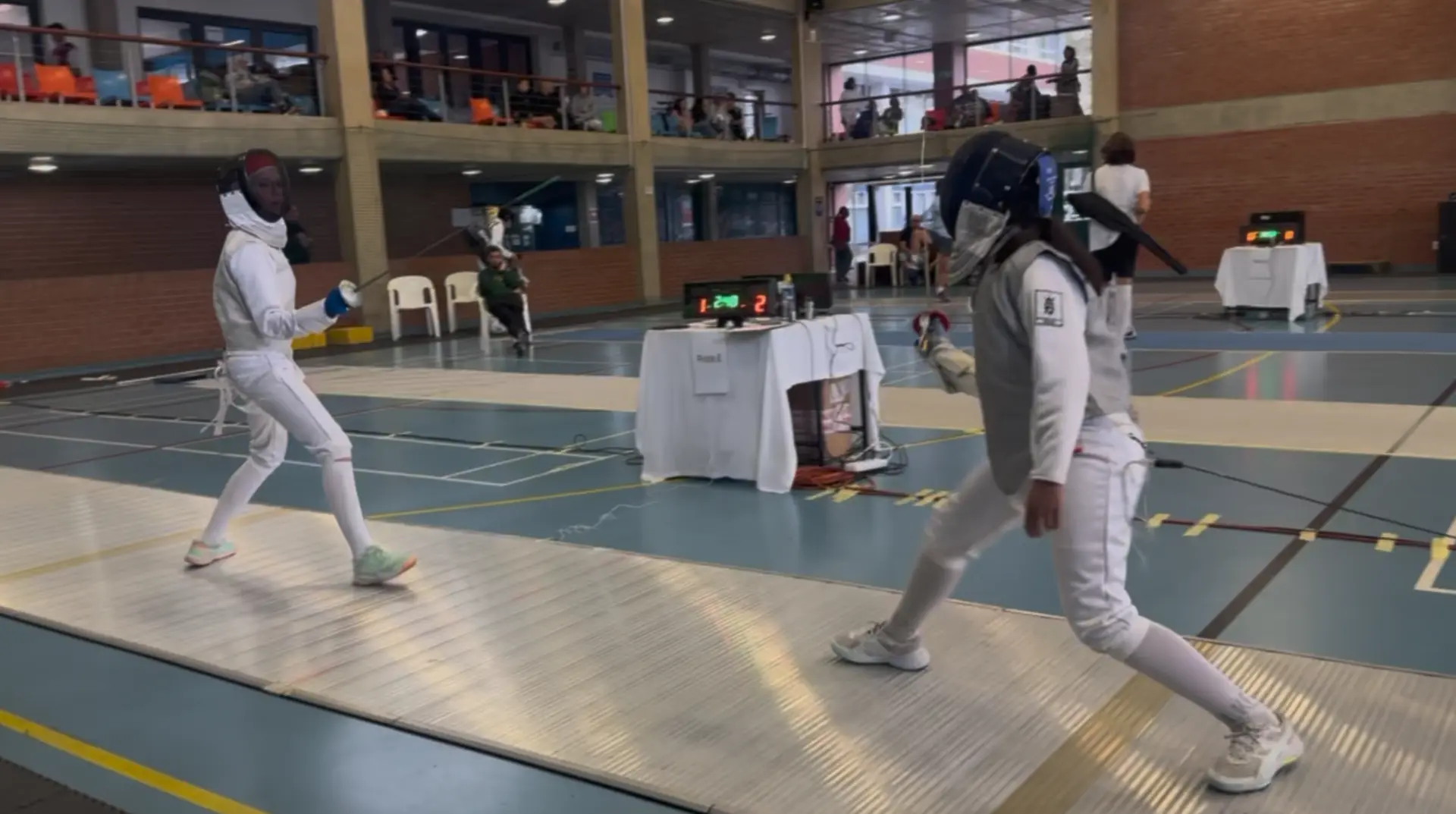
Fencing rewards thinking, timing and nerve — not size or brute strength.
It gives a sporting home to the child who hasn't found their sport yet.
No field required. A school hall is enough to start.
For generations, school sport has been built around a familiar picture of the young athlete: fast, strong, physically imposing, highly competitive and comfortable in a team environment. In South Africa, that picture is particularly familiar. Rugby. Hockey. Netball. Cricket. Soccer. Athletics.
These sports are an important part of school life and offer enormous benefits to children. But they are not the only way a child can experience competition, physical activity, teamwork, discipline and sporting achievement.
What about the child who doesn't see themselves in that picture? The child who is more analytical than aggressive. The one who loves strategy and problem-solving, who is quick and coordinated rather than physically imposing, who enjoys individual challenges more than large team environments. Or simply the child who hasn't found their sport yet.
This is where fencing deserves a place in modern school sports programmes.
School sport should have room for more than one type of athlete
A good school sports programme should not only cater for children who naturally gravitate towards traditional team sports. It should create opportunities for different personalities, different body types, different interests and different ways of thinking.
That doesn't mean replacing rugby with fencing. It means adding more doors through which children can enter the world of sport. Modern school programmes increasingly combine team and individual activities, giving learners the chance to discover where they thrive.
Fencing fits naturally into that model: an Olympic sport combining physical movement with concentration, timing, tactical decision-making and discipline.
And perhaps most importantly: you don't have to look like an athlete to become one.
Fencing is not about being the biggest or strongest
A bout is a constantly changing problem. You read your opponent, control distance, recognise patterns and make decisions under pressure — attack, defend, adapt and sometimes completely change your plan within seconds.
There is certainly a physical component: fencers develop speed, balance, coordination, agility and fitness. But it works alongside another element — thinking. That makes fencing particularly interesting for children who enjoy chess, mathematics, gaming, puzzles or strategy but don't see themselves as traditional athletes.
It is sometimes described as physical chess — except the board is moving, your opponent is moving, and you have fractions of a second to decide.
Olympic
Sport at every Games since 1896
3
Weapons: foil, épée and sabre
1-on-1
Nowhere to hide, every point earned
Age 8+
Children can start in primary school
What people assume vs. what actually happens
A sport for the child who doesn't fit the sporting stereotype
Every classroom has them. The child who isn't particularly interested in rugby. The girl who doesn't enjoy netball. The boy who isn't enthusiastic about cricket. The child who loves competition but not contact sport. The child who would rather solve a problem than chase a ball.
Sometimes they're the children quietly sitting on the sidelines while everyone else seems to have found their thing. That matters — because not finding your sport is often mistaken for not being sporty. Those are two completely different things.
Fencing offers another entry point. Beginners need no previous experience or particular level of fitness. Coaches introduce footwork, balance and blade skills progressively.
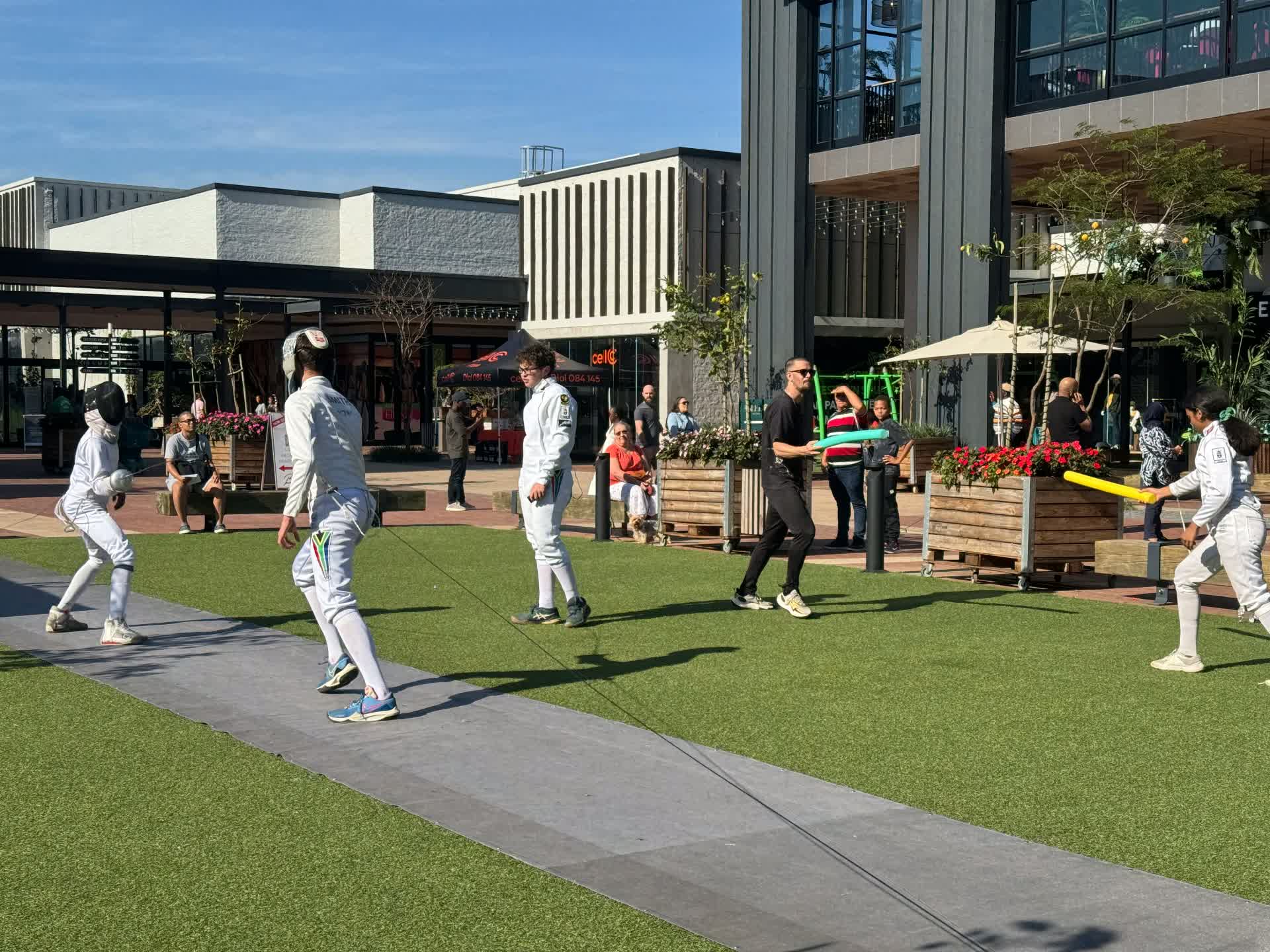
Physical and intellectual development, together
Modern education increasingly recognises that children need more than academic knowledge. Fencing brings many of those elements together in a single session.
Skills fencing develops in every child
- Concentration
- Decision-making
- Resilience
- Self-discipline
- Confidence
- Physical literacy
- Communication
- Coping with setbacks
- Performing under pressure
Imagine standing opposite another child. There is no hiding. You have to make the decision and commit. Sometimes you get it right. Sometimes you don't. Then you reset and try again — hundreds and eventually thousands of times. That is the quiet power of an individual sport: the child learns to own the outcome.
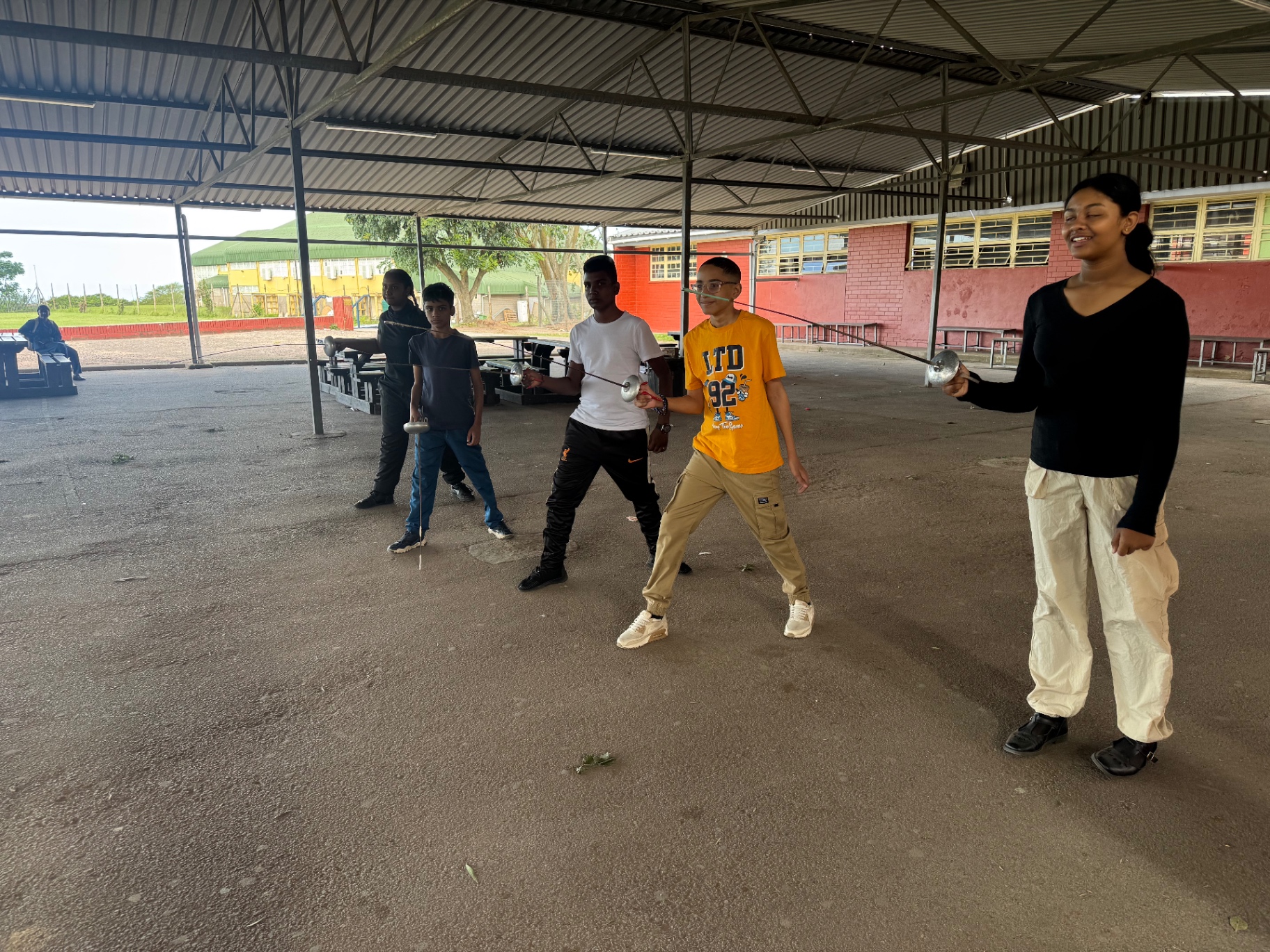
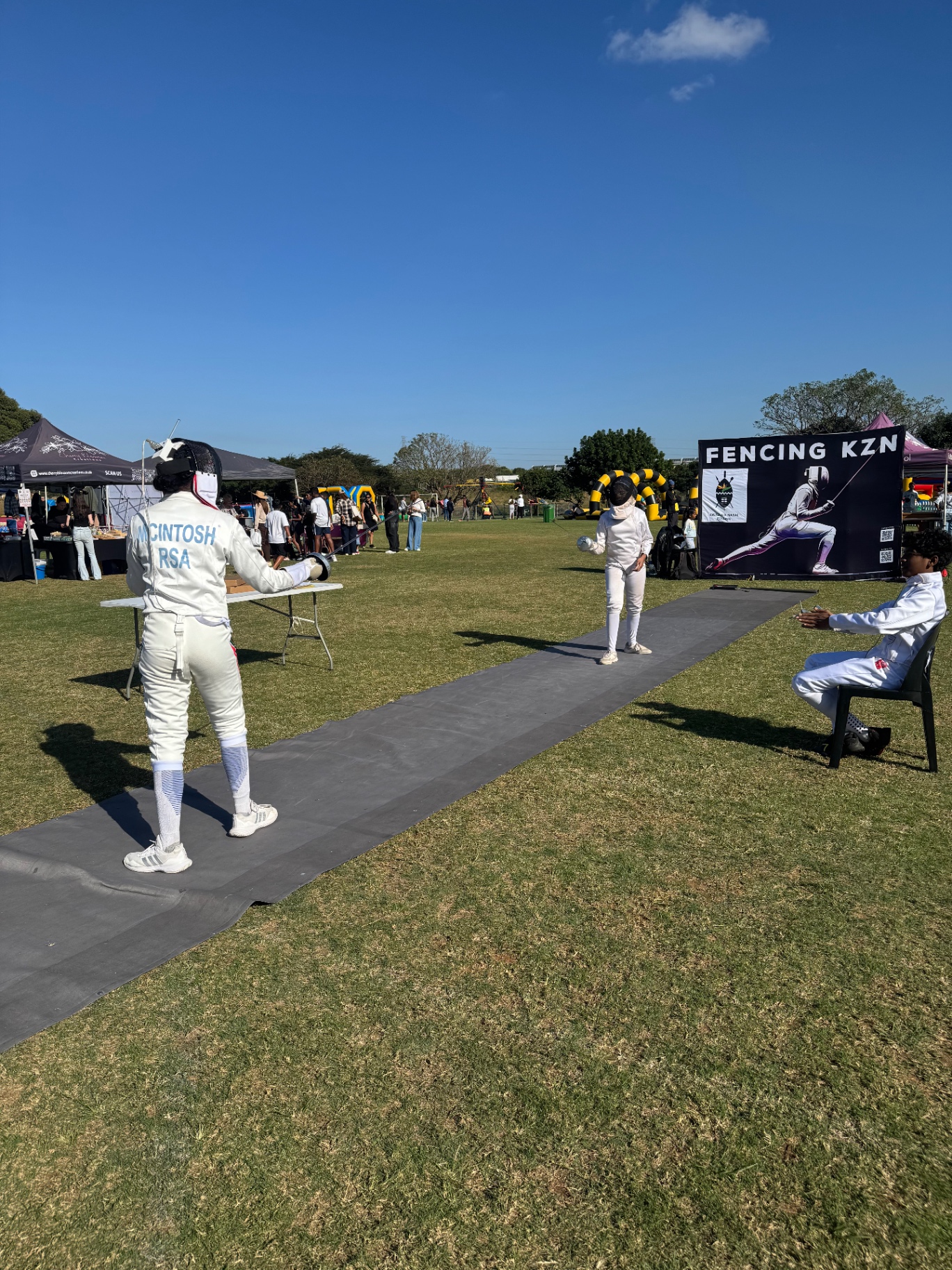
Fencing doesn't require a sports field
Schools have limited facilities. Fields are expensive to maintain, indoor space is valuable and timetables are complicated. Fencing has a small spatial footprint compared with traditional field sports.
A school doesn't need a rugby field to introduce fencing — a suitable indoor hall can become a fencing training environment. That makes it attractive for schools looking to expand their offering without another playing field. Fencing KZN already works with schools and communities to introduce learners to the sport.
An Olympic sport — with a genuine competitive pathway
This isn't an after-school activity with nowhere to go. A child can start with an introductory session, move into regular club or school training, compete provincially, and progress to national and international competition.
- Step 1
Try a session
- Step 2
Club or school training
- Step 3
Provincial competition
- Step 4
National & international
In KwaZulu-Natal the pathway includes club and school participation, provincial competitions, national events and international competition for athletes who meet the requirements. A child can start simply because they want to try something different — and years later still be fencing. No one has to "make the first team" at 12 for the experience to matter.
Competition is part of the appeal, but it doesn't have to mean elite sport from day one. One child fences because they enjoy it; another discovers they love competing; another chases provincial selection. Fencing KZN supports all three through clubs and school programmes across KwaZulu-Natal.
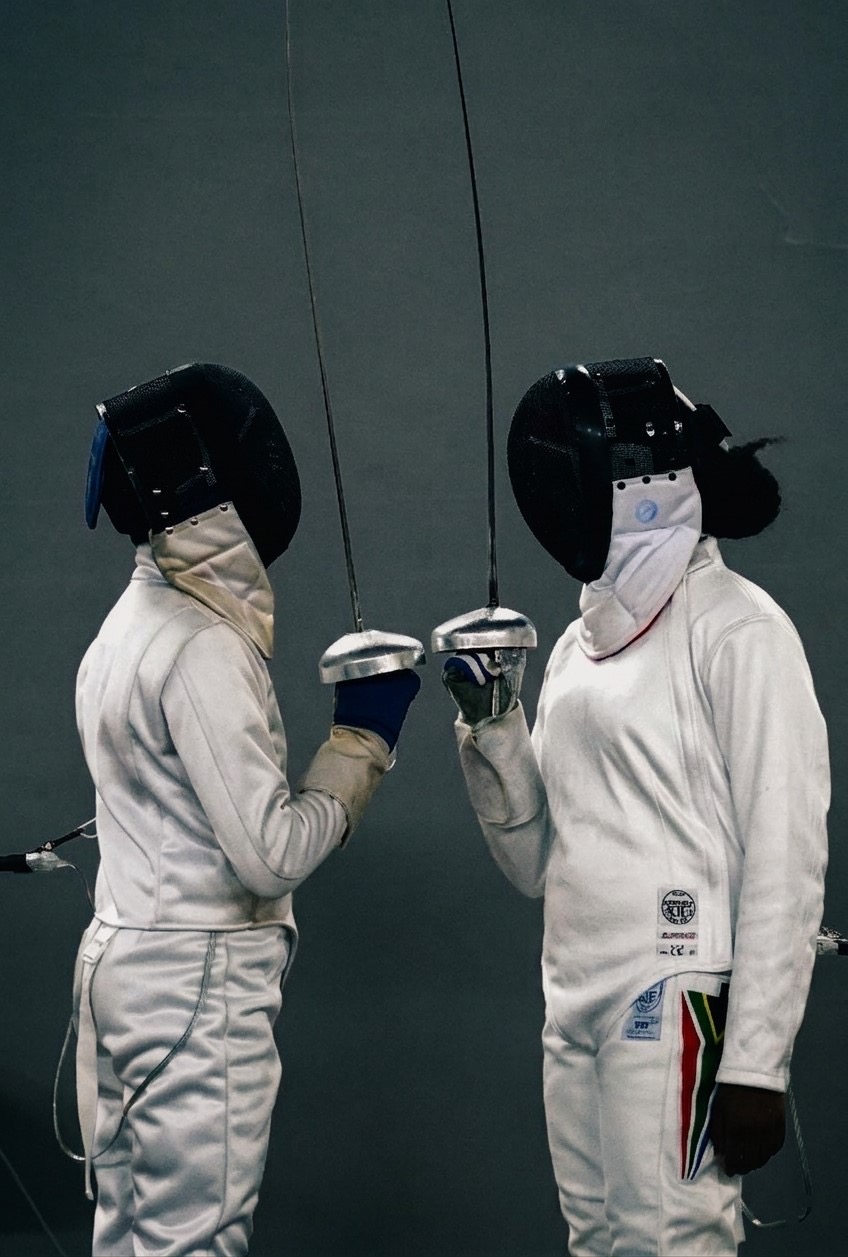
What can fencing offer a school?
For school administrators, the useful question isn't "Is fencing a good sport?" but "What does adding fencing contribute to our school?"
- Another sporting option for learners who aren't engaging with traditional sports
- A differentiated extracurricular offering
- An Olympic sport children may never otherwise encounter
- A complement to existing individual and team sports
- A competitive pathway beyond the school itself
- A way to reach children standing outside the traditional sporting culture
That last point matters. Sport should not be a club that some children are born knowing how to join. Schools can introduce children to sports they might never encounter otherwise.
Parents: your child doesn't have to be a "sports kid"
If your child doesn't enjoy rugby, don't assume they don't like sport. If they don't enjoy netball, don't assume they're not competitive. Ask a different question: what kind of sport suits the way my child thinks and moves? Maybe they need something strategic — a sport that rewards patience rather than size, where being observant is an advantage.
Fencing could be that sport.
Durban already has a growing fencing community, with affiliated clubs and programmes serving Hillcrest, Westville, Morningside, Windermere, Glenwood, Durban North and Chatsworth. Schools don't have to build a sport from scratch — the provincial body, coaches, clubs and competitions already exist. Fencing for kids in Durban is already happening every week.
Start with a demonstration
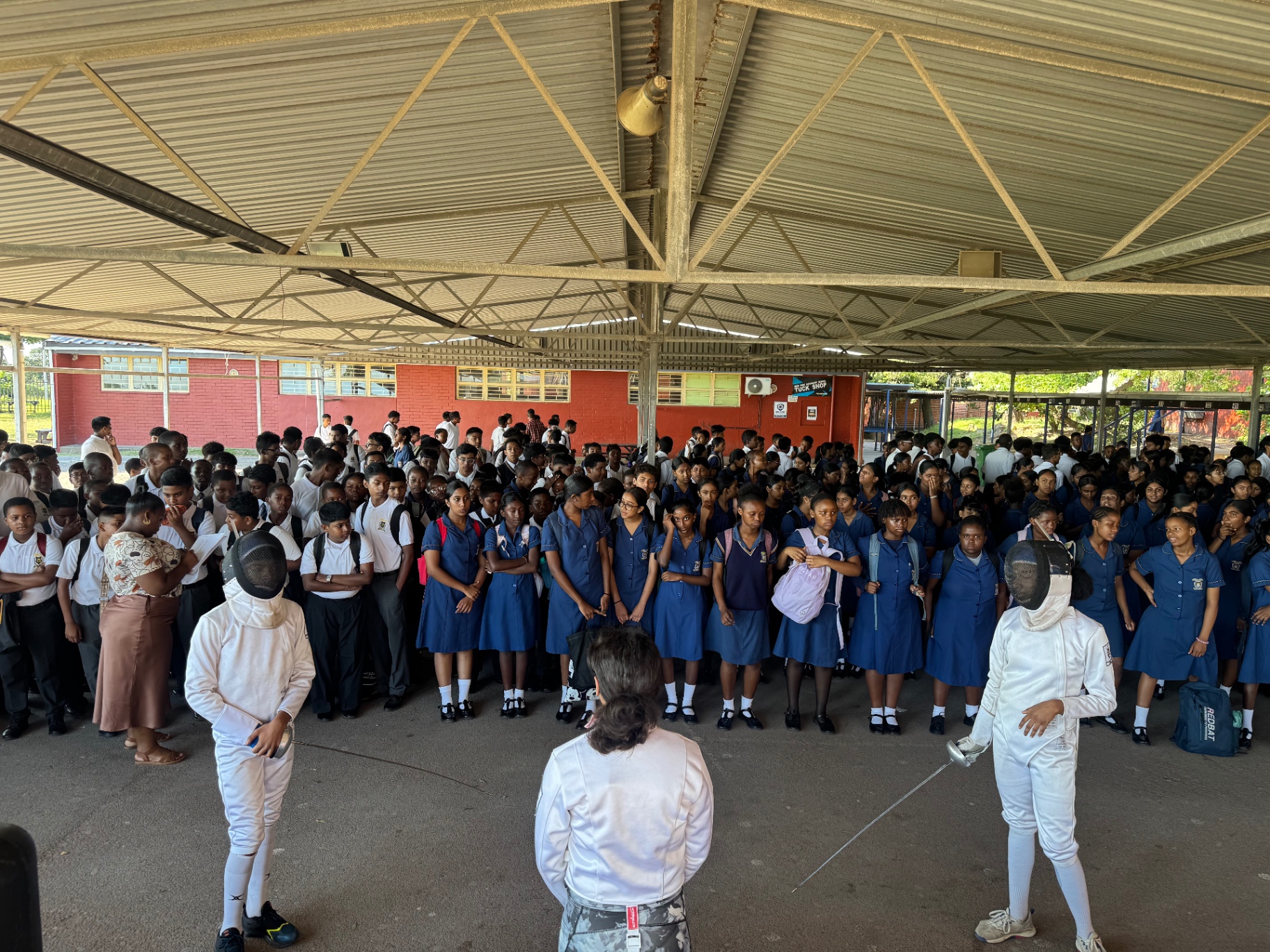
The first step doesn't have to be a commitment. Let the children try it. Bring fencing into the school, let learners see a demonstration, put on a mask, hold a weapon, experience footwork. Let them fence. Then ask them whether they want more.
That's a far better way to gauge interest than sending parents a flyer. Fencing KZN provides school demonstrations and introductory sessions specifically to help schools experience the sport.
What does a school need to provide?
A space
An indoor hall or similar area that can host a session.
Learners
A group of interested children — no experience required.
Willingness
An openness to try something different. We handle the rest.
The aim isn't for the school to become a fencing organisation. It's to make offering fencing easy — an introductory programme, an after-school club, or eventually a competitive school fencing team.
Rugby will remain rugby. Hockey will remain hockey. But modern schools can also ask: who isn't being served by our current sporting offering? Where does the analytical child go? The smaller child? The child who loves competition but not team sport? The child who has always been told they're "not sporty"?
Perhaps they belong on a piste. Perhaps their sport is fencing. And perhaps they've simply never been given the opportunity to discover it.
Your school provides the space. We provide the opportunity.
If you are a school administrator, sports director, teacher or parent interested in introducing fencing at your school, contact Fencing KZN — the provincial home of fencing in KwaZulu-Natal — to discuss a demonstration or introductory programme.
Your learners discover what they can do.